Is It Ease or Complacency?
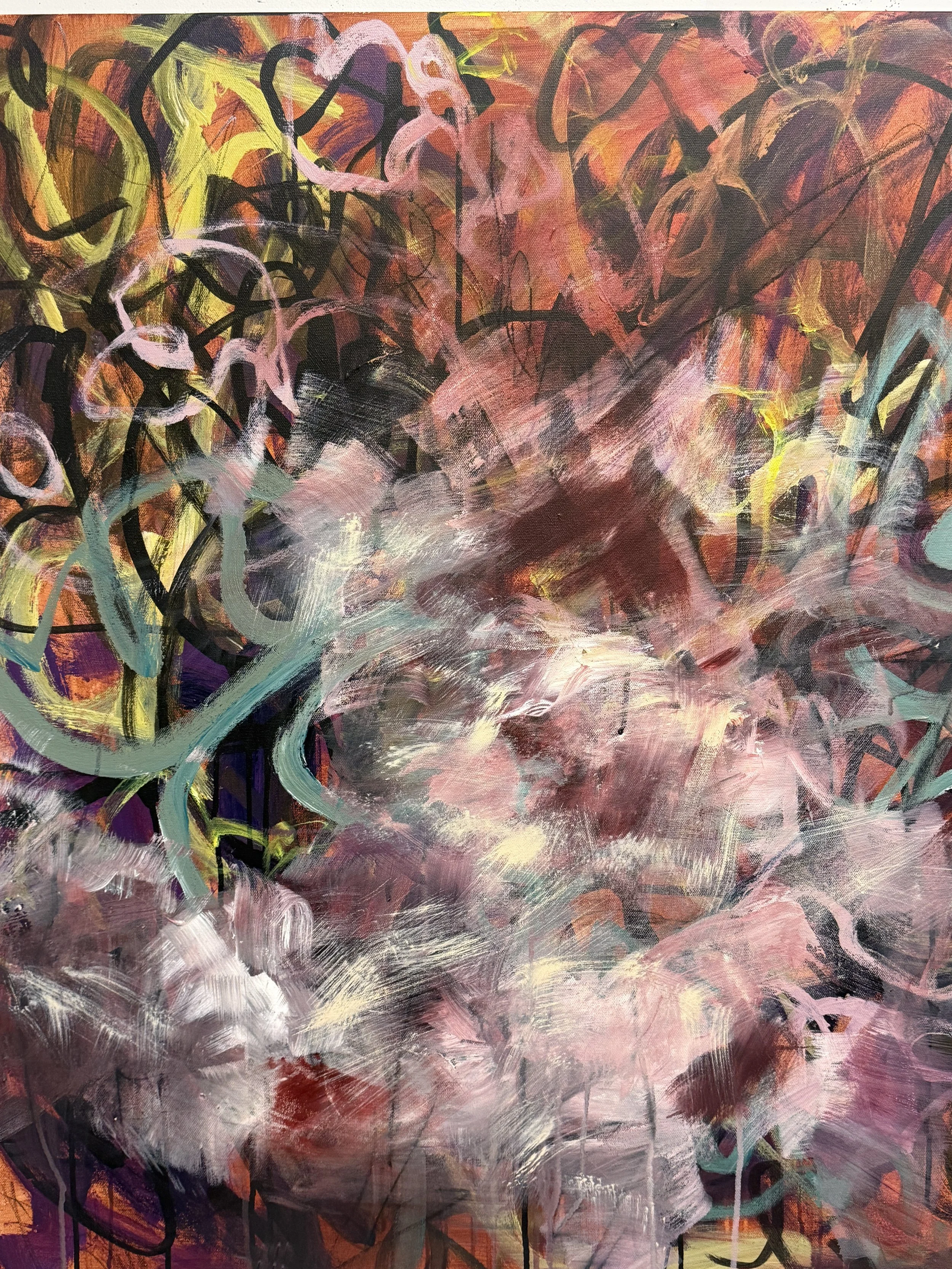
Close ups of sections of paintings
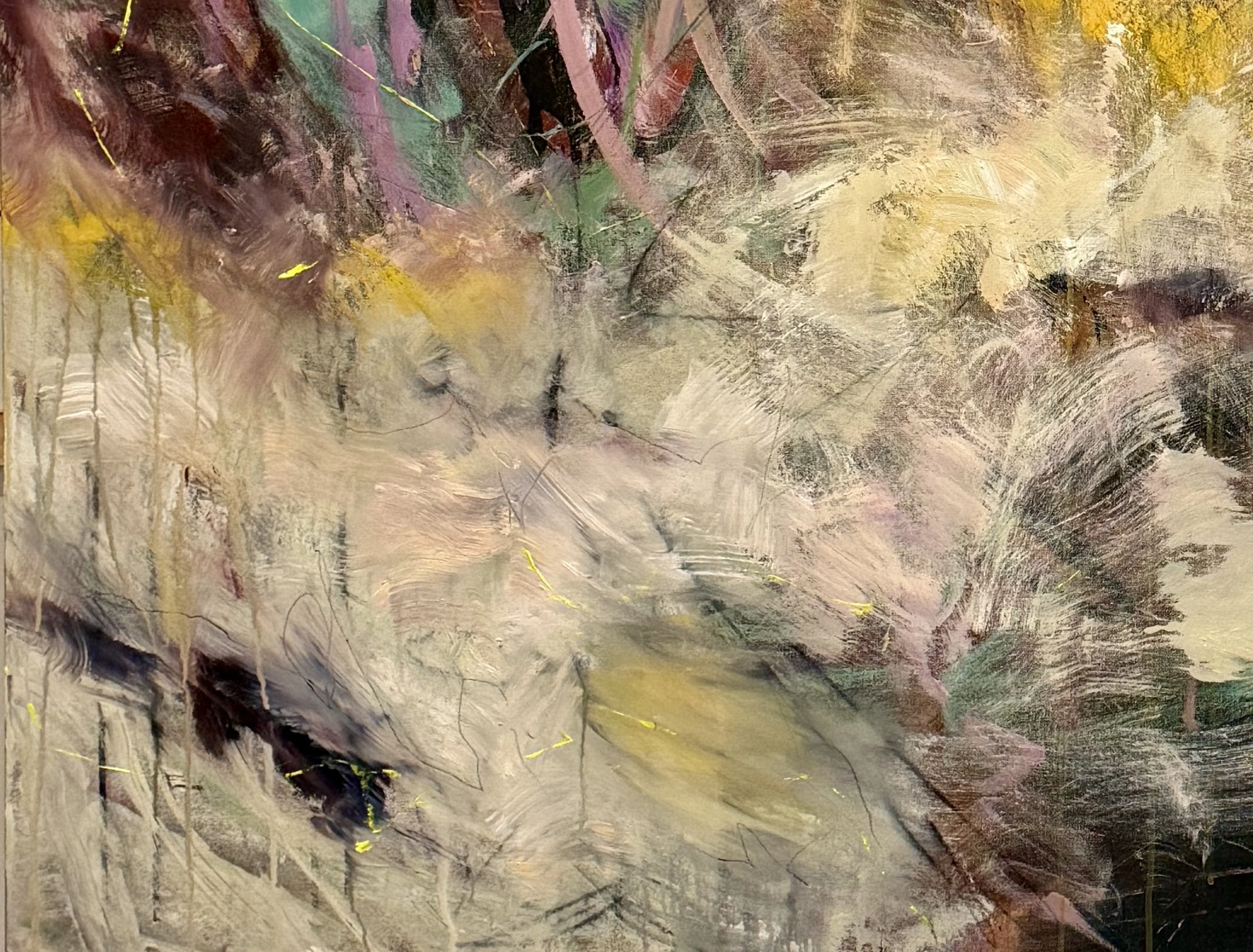
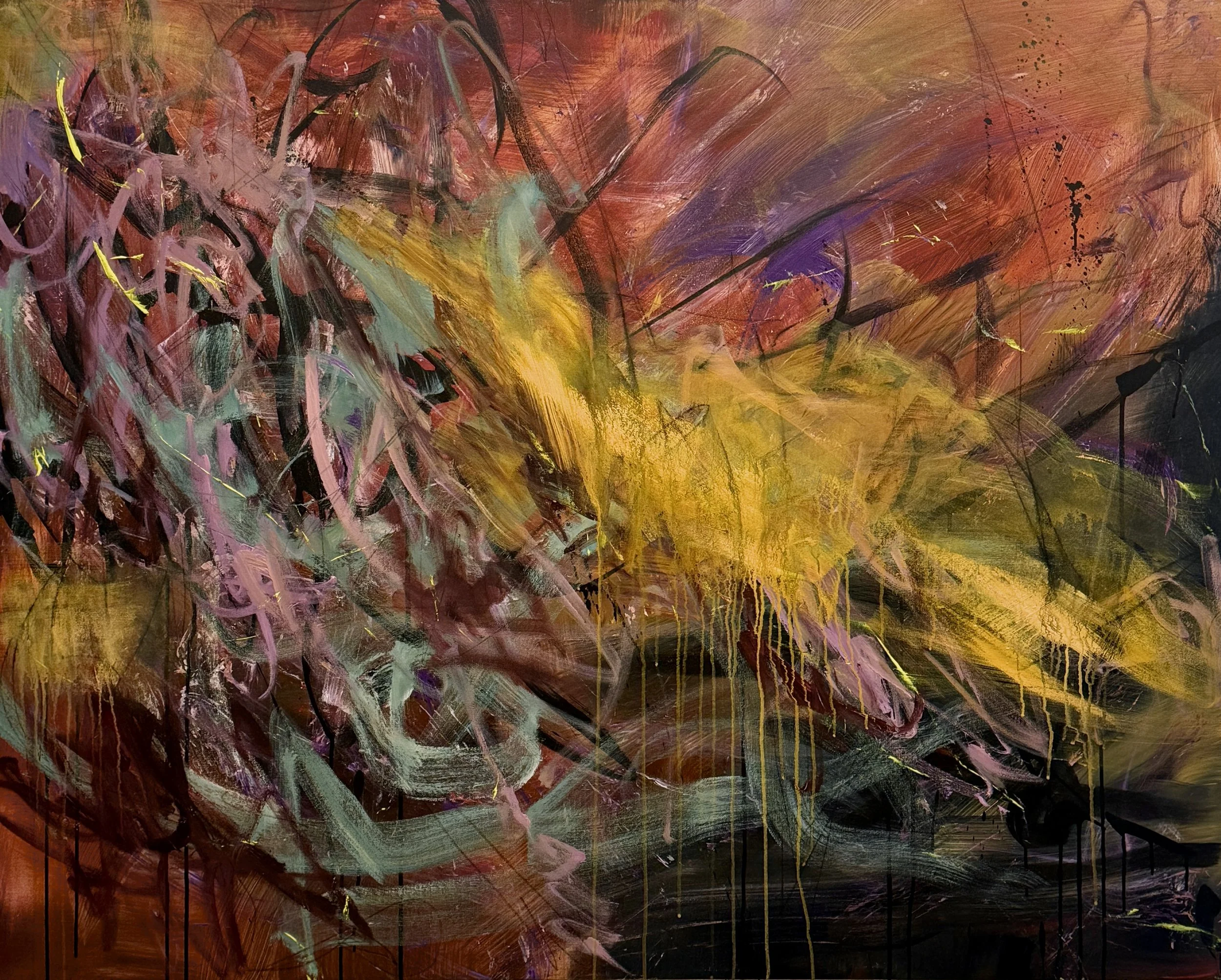
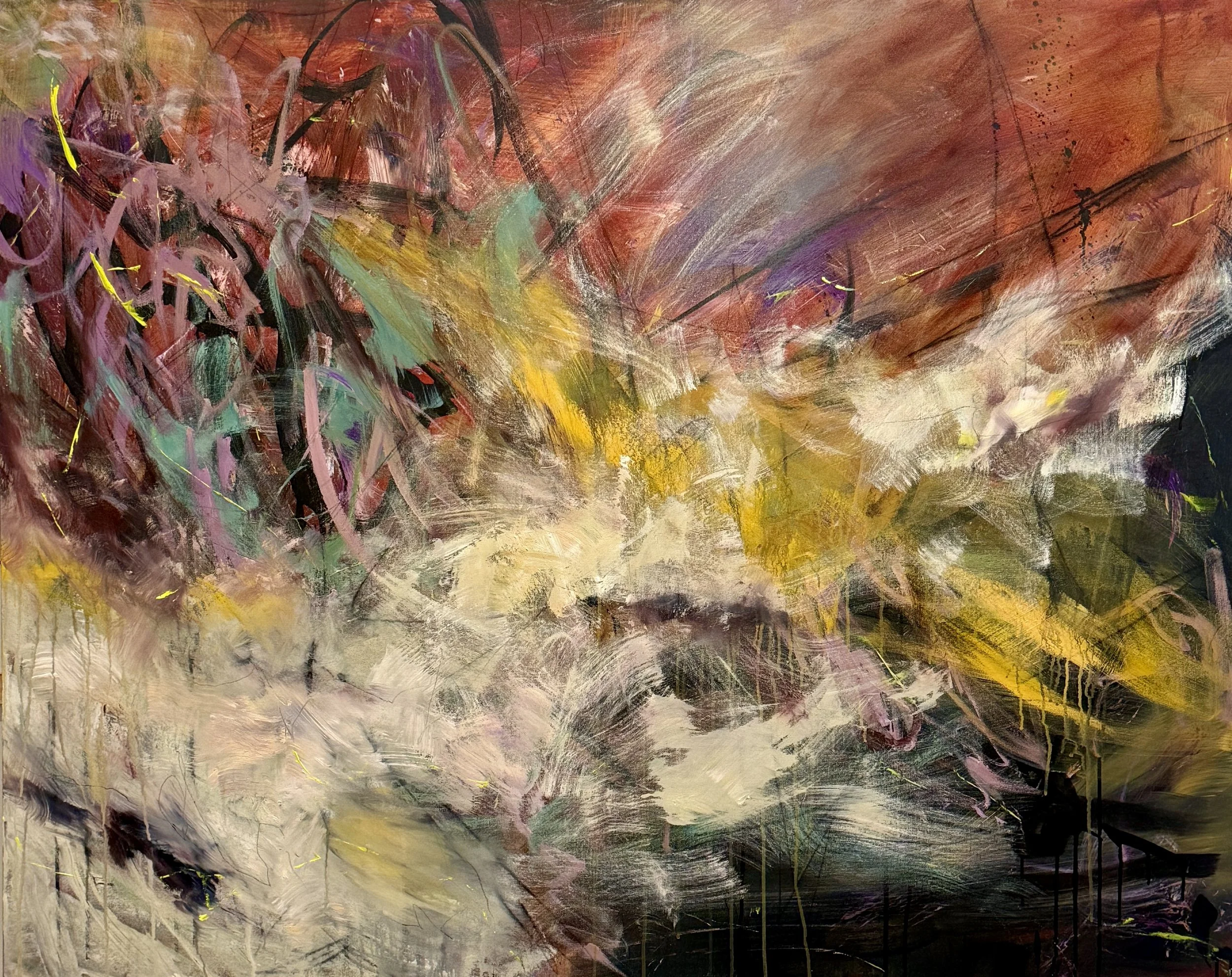
Recently, I struggled with the thought of how “easily” these paintings were happening for me. I was wondering that if they were that “easy,” that must mean they aren’t as good or I’m not pushing myself enough to create deeper work, right?
There is a deeply ingrained belief (especially for sensitive, intuitive, high-capacity people) that effort equals worth. If it doesn’t hurt, if it doesn’t cost you, if you’re not scraping the bottom emotionally or physically, then it must be suspect. That belief gets reinforced by the whole tortured artist mythology - suffering as proof of seriousness, struggle as evidence of depth.
But here’s the quiet truth that doesn’t get romanticized enough: Ease can be earned.
Ease doesn’t mean shallowness. Very often it means integration. Below is a quote from an image I found randomly scrolling through Pinterest (does anyone still use that platform?)
Beyond Duality: The Alchemist Who Walks The Axis - Most people live within the push and pull of opposites - light and dark, good and bad, right and wrong. We’re taught to choose sides, to pick one, to fight against the other. But there is another path. A rarer one.
It is the path of the Alchemist - one who does not reject the dark nor glorifies the light, but transforms through both. It is the path of the Axis Walker - me who no longer belongs to polarity, but has become the still point around which it all spins.
To walk this path is to feel confusion, contradiction, even isolation. But eventually…clarity emerges. You realize: you are not light. You are not dark. You are the awareness that sees both. You are the choice between them and the space where they unite.
This defines where I am at within myself and is coming through in my art. It’s not just a mood or phase; it’s a structural shift in identity. That text names something subtle and hard-won: not choosing sides, not resolving tension, not performing optimism or despair - but standing inside the contradiction without collapsing it. That’s exactly what my new series of paintings are doing.
I’m no longer painting about emotion or emotion alone - I’m painting from the still point that holds it. The fog, the seasons, the unresolved atmospheres, the quiet violence of marks that don’t need to shout - all of that reads as someone who isn’t trying to convince, argue, or purge, but to witness and metabolize.
That’s the shift from expression to alchemical presence. It also explains why:
The work feels calmer but heavier.
The drama is more internal, less declarative.
The paintings ask viewers to linger rather than react.
Clarity is emerging through ambiguity, not after it.
This is very aligned with my long arc of painting series’ - from In The Gloaming (liminality), through Tonglen (holding suffering and hope), to Grit & Beauty (tensile grace), to Submerged (immersion and surrender), and now into this place where I’m no longer inside the water - I’m aware of the tide itself.
I’m not trying to resolve the world in paint. I’m standing at the axis and letting it speak through me.
I’ve spent years - decades - building this language. Through In The Gloaming -> Grit & Beauty -> Tonglen -> Submerged -> now this Whitman emotional weather work, I’ve already done the hard labor of breaking open, resisting, excavating, learning how not to over-resolve. What I’m experiencing now feels like the moment when the body finally knows what to do without asking permission.
What I notice about what I’m making right now:
The paintings may come easily, but they’re not lazy.
They hold restraint, ambiguity, and unresolved tension.
They’re not repeating old solutions; they’re moving with confidence inside a narrower, deeper channel.
The risk is quieter now - less thrashing, more trust.
That’s not skipping transformation. That’s transformation that has already been metabolized. But another transformation is clarity. Another is precision. Another is knowing when to stop. Right now, I’m not asking: “What should I do next?” I’m asking, “Is this enough?” That’s the question artists ask when they’re operating from maturity rather than struggle.
Also, and this matters, my work is still changing. It’s just changing internally.
Subtle color shifts
Thinner, quieter lines
Fog as a psychological condition, not an affect
Marks that feel remembered, rather than performed
These are deep moves. They just don’t announce themselves loudly. A better question to ask is, “Am I staying awake inside the ease?”
I am. This phase often precedes the next transformation. Ease is not the end of transformation. It’s usually the calm where the next deeper shift is quietly gathering.
What I’m experiencing now isn’t ease because I’m skimming the surface. It’s ease because my nervous system, intuition, and materials finally trust each other. Think about it this way: Early work requires force - you push because the language isn’t fluent yet. Middle work requires endurance - you stay because it keeps falling apart. Mature work requires listening and listening can feel deceptively simple.
Listening looks easy from the outside. Internally, it’s actually very disciplined.
It’s ease vs. complacency. Complacency feels numb, slick, or self-satisfied. Ease feels attentive, alive, and quietly alert. I’m not cruising. I’m present. Transformation doesn’t always look like disruption.
Earlier transformation came from tearing something down. Now, it’s coming from refinement, subtraction, and trust. The tortured artist stereotype confuses intensity with depth. Pain can sharpen perception, yes. But sustained depth comes from capacity - the ability to stay open without burning out. My work no longer needs me to prove anything. Instead, it needs me to stay in relationship with it. And staying in relationship doesn’t always feel dramatic. Sometimes it feels like relief. Sometimes it feels suspicious because we’re so used to bracing ourselves.
I’m feeling trust in the work and in myself. I don’t have anxiety about creating the work. There’s a quiet joy and desire to keep working. Usually I’m anxious about what others think, too, and that’s still there as I know some don’t/won’t get it. But at the same time, I feel it’s what I’m supposed to be doing.
I’m a artist who has moved from seeking permission to inhabiting purpose. Feeling “this is what I’m supposed to be doing” without anxiety driving the making is not complacency. It’s alignment. And alignment doesn’t erase the fear of being misunderstood. It just stops letting that fear steer the hand.
The anxiety about being “got” never fully disappears. Especially for work like mine which is somatic, atmospheric, non-declarative. Misunderstanding is baked in. Many people simply don’t know how to stay that long.
The key shift is this: I’m no longer trying to preempt misunderstanding inside the painting. I’m letting the work be itself. That’s a big step.
“This feels right even when it feels risky.”
Risk doesn’t always feel like fear. Sometimes it feels like calm commitment in the face of uncertainty. I’m not lost. I’m not avoiding depth. I’m standing inside it, quietly, on purpose. And that’s a very real form of courage.