
The Pressure To Finish
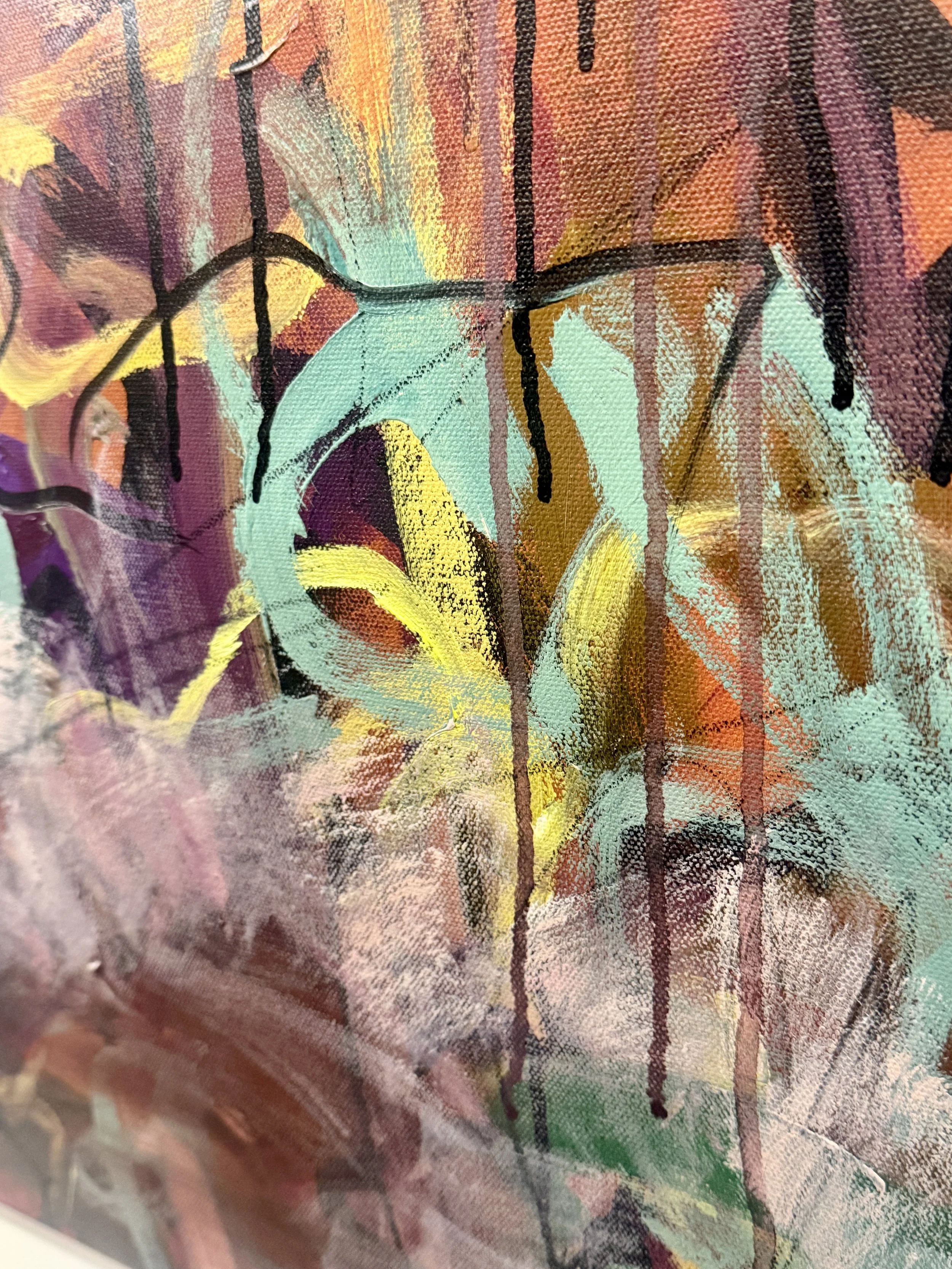
There is a quiet pressure in the studio that has very little to do with paint. It’s the pressure to finish.
To resolve.
To make something “work.”
To move on.
I’ve felt it in my own body — that tightening when a painting reaches a certain stage and could be declared done. The composition reads. The color holds. Nothing is technically wrong. It could leave the studio, be photographed, be shared.
But sometimes the work isn’t finished. It’s just coherent.
We live in a culture that rewards resolution. Articles wrap up neatly. Conversations move quickly. Social media favors immediacy. Even in art, surfaces that read clearly at a glance often travel further and faster. The eye understands them quickly. The viewer feels oriented.
There is nothing inherently wrong with clarity. But clarity is not the same as depth.
In my studio, I’ve begun to recognize the difference between a painting that is complete and a painting that is merely legible. The legible painting explains itself. It offers entry and exit. It does not ask the body to stay very long.
The deeper painting unsettles. It contains passages that resist immediate interpretation. It may include areas that feel unresolved — not because they are mistakes, but because they are still carrying tension.
The temptation is to smooth those areas out. To unify the surface. To make the parts mesh.
But lately I’ve been asking a different question: What if the tension is the point?
What if the visible seam, the scratched line, the underlayer pushing through — what if those are not problems to correct but evidence of the painting thinking?
I have left canvases hanging in my studio for weeks without touching them. At first, that pause felt like avoidance. Now I understand it as listening. The painting changes as I live with it. What felt incomplete sometimes reveals itself as necessary friction. What felt awkward becomes structural.
Finishing too quickly can be a form of self-protection. A way of avoiding discomfort. If I resolve the tension, I don’t have to sit inside it.
But sitting inside it is where something shifts.
Scale intensifies this. Standing before a large surface, the body registers hesitation and urgency at the same time. There is space to move, to step back, to circle the work. The painting answers physically. It is not a small object to correct with careful adjustments. It is an environment to enter.
In that space, the urge to tidy becomes more visible. So does the discipline required to resist it.
Not every painting needs to be difficult. Not every work needs to carry density. But when the work is asking for endurance, finishing early is a disservice.
The pressure to finish often masquerades as productivity. Move on. Start the next piece. Keep momentum. Yet some paintings require stillness rather than speed. They require the artist to tolerate ambiguity — to allow contradiction to remain present without rushing toward resolution.
I’ve come to see that the decision not to finish is sometimes the most active choice in the studio.
It is a refusal to reduce complexity for the sake of comfort.
It is an acknowledgment that wholeness does not always look seamless.
The paintings that stay with me the longest are rarely the most resolved. They are the ones that feel layered — that hold evidence of their own process. You can sense where something was changed, covered, reworked, resisted. The surface feels lived in.
That lived-in quality does not come from perfection. It comes from duration.
In a culture that accelerates everything, duration can feel radical. Letting a painting remain unresolved for a time is not laziness. It is commitment. It is a willingness to stay with what is not yet tidy.
The studio, at its best, becomes a place where complexity is allowed to gather. Where visible contradiction is not erased. Where finish is not confused with completeness.
Sometimes the most honest thing a painting can do is refuse to conclude too quickly.
