The Long Arc of Becoming
The Long Arc of Becoming
A few days ago I opened a sketchbook and found something I had written in 2024 while working on the Grit & Beauty series. I had forgotten about it completely. It wasn’t an artist statement or something meant for public eyes—just a raw page of thoughts written in the middle of painting.
Reading it now felt strangely familiar, like hearing an earlier version of my own voice speaking from another room.
What struck me most was that the ideas I’ve been wrestling with in my current Whitman-inspired paintings were already there, quietly forming beneath the surface.
At the time I wrote:
“These paintings are something new for me… layered human beings. We are not one, but many. We reveal in pieces, moments, over time, never all at once.”
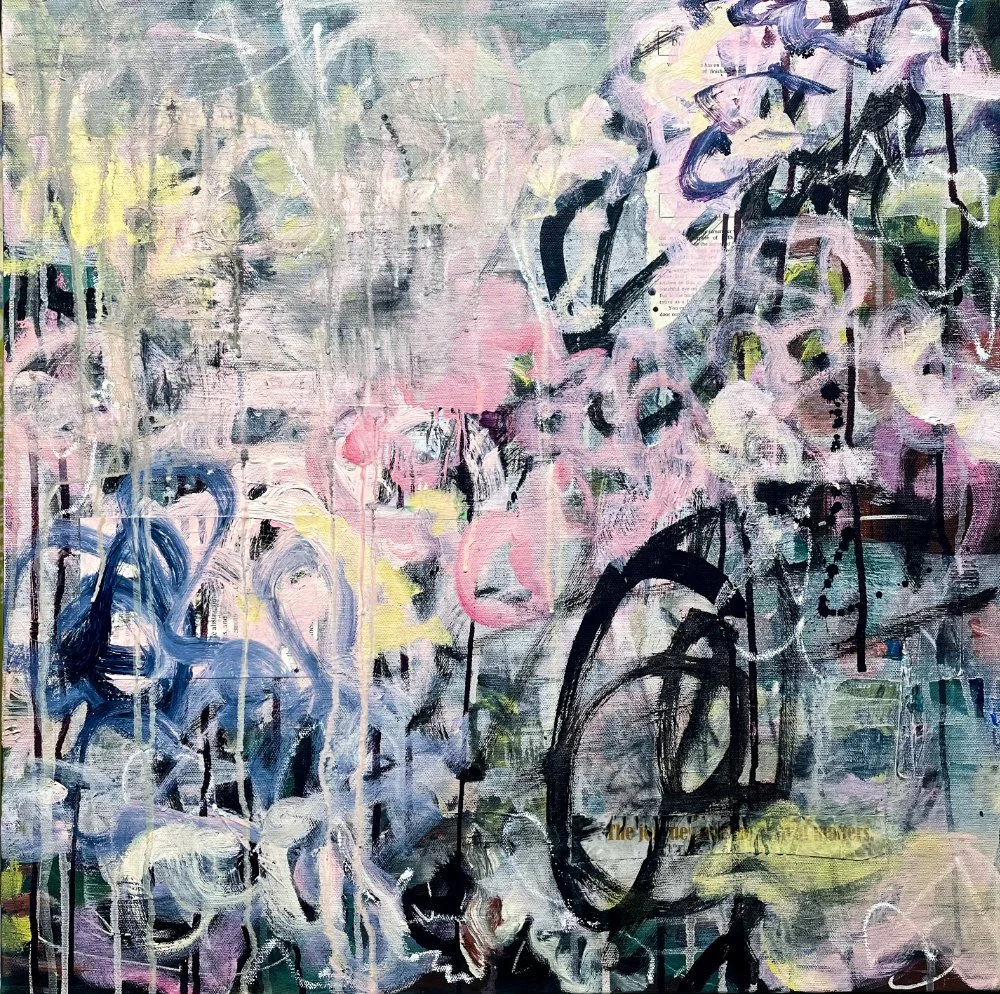
I didn’t realize it then, but I was already circling the same idea that now sits at the center of my current work: multiplicity. The understanding that we contain many emotional states at once, shifting and evolving like weather systems moving through a landscape.
When I began the Whitman series, I felt as if I had discovered something new. Whitman’s words—“I am large, I contain multitudes”—felt like a revelation. But looking back at this sketchbook page, I can see that the idea had already been living inside my work for some time.
Whitman didn’t give me the idea.
He gave me language for something I had already been painting.
The Slow Evolution of a Practice
Artists often talk about breakthroughs as if they happen suddenly, like lightning. But the truth is that most breakthroughs are built slowly over years of small realizations and quiet persistence.
When I look at my own work over time, I can see a kind of continuity that I didn’t always recognize while I was inside it.
Each series has been an exploration of emotional states and interior landscapes, just through different metaphors.
In The Gloaming explored the liminal hour between day and night—the softening of edges, the quiet moment when the world exhales.
Grit & Beauty examined the tension between resilience and vulnerability, between struggle and grace.
Tonglen moved into the territory of emotional exchange—how we hold suffering and compassion at the same time.
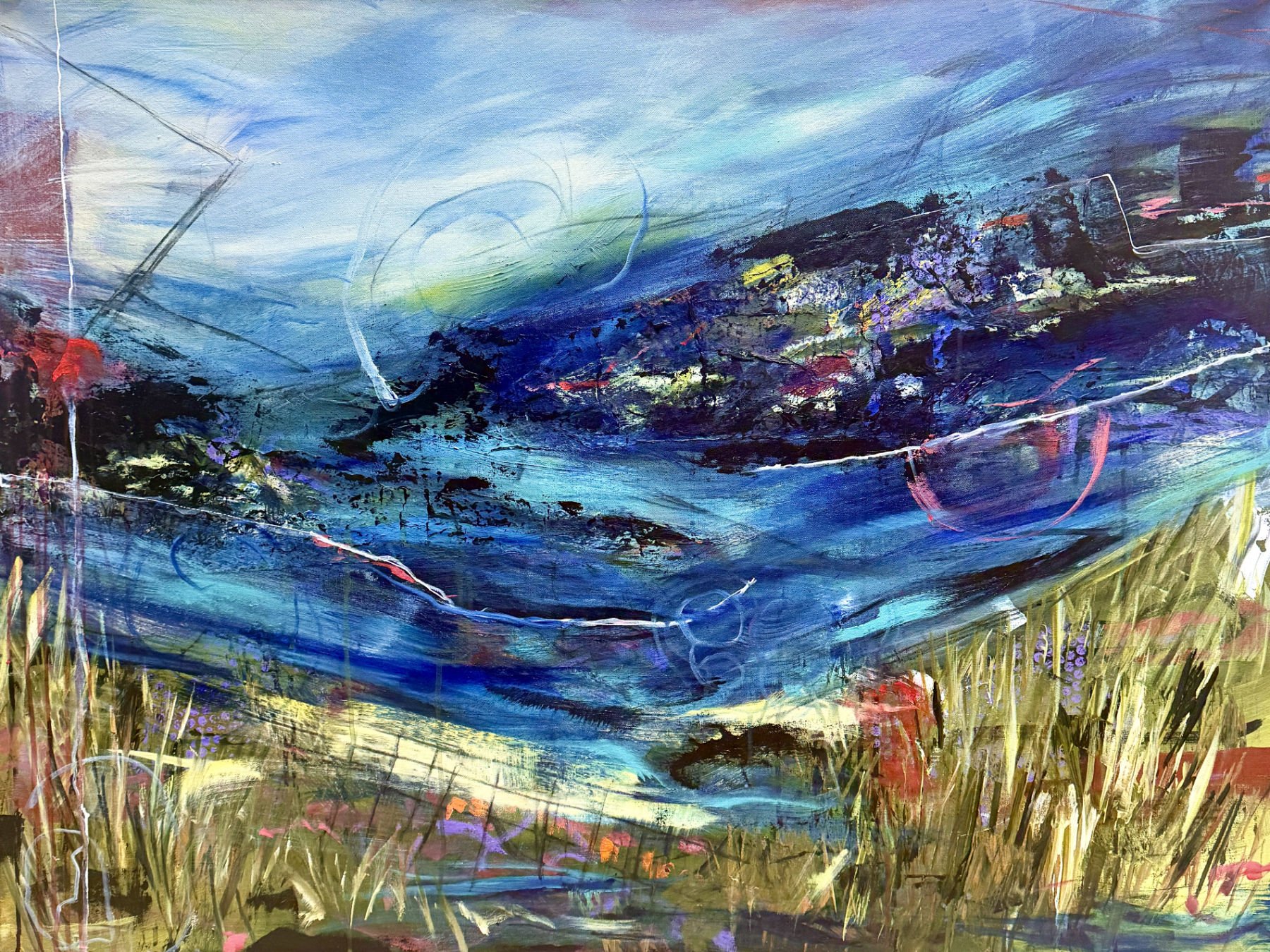
Submerged entered the language of water: immersion, surrender, and the dissolution of boundaries.
And now the Whitman paintings are asking a slightly different question.
What does it mean to contain all of this at once?
Not sequentially.
Not one emotion replacing another.
But multiple emotional states coexisting inside the same internal atmosphere.
Emotional Weather
Lately I’ve been thinking about feelings less as fixed states and more like weather patterns.
Storms move in. Fog settles. Light breaks through. Pressure shifts. Things gather, disperse, and return again.
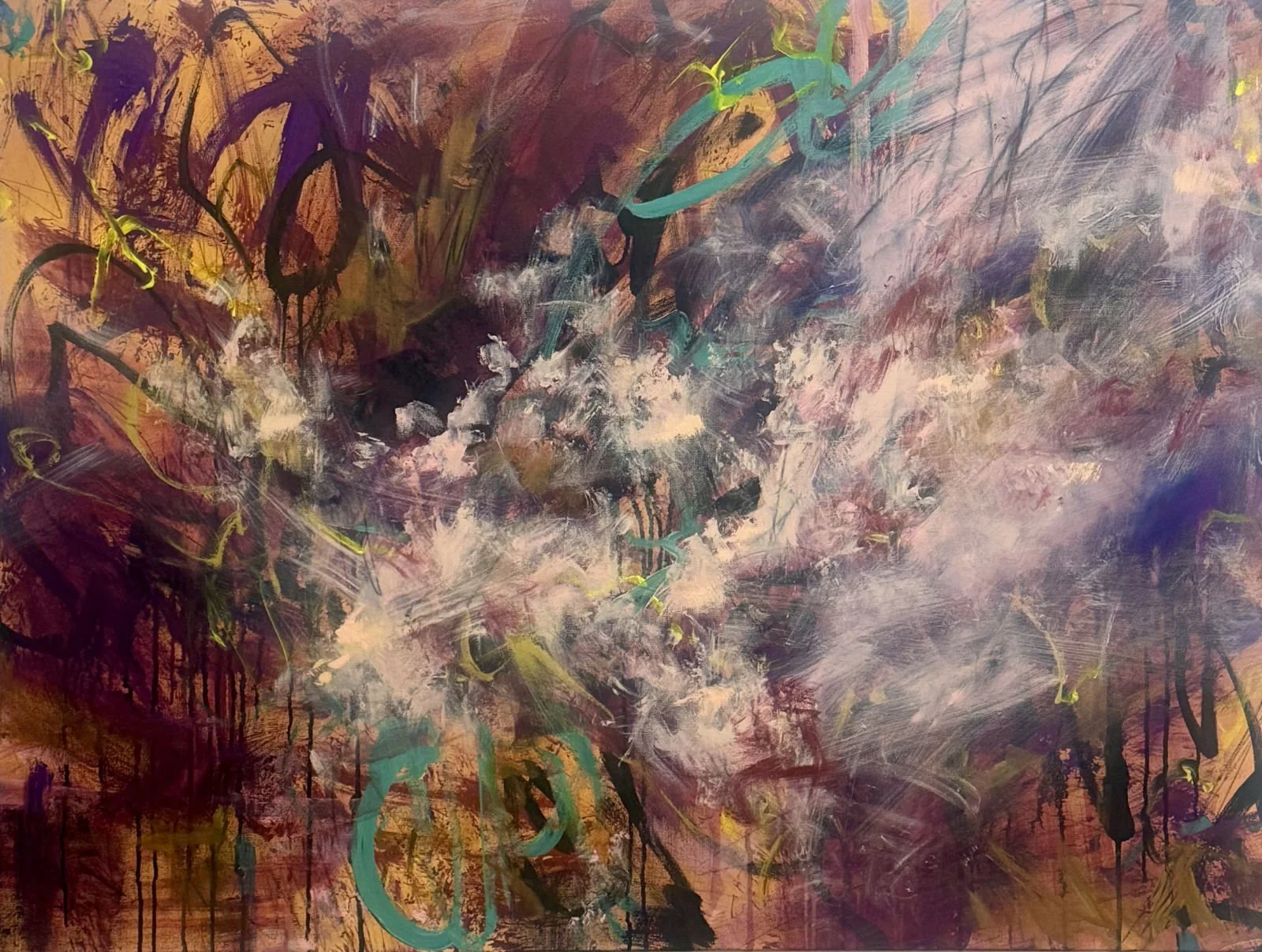
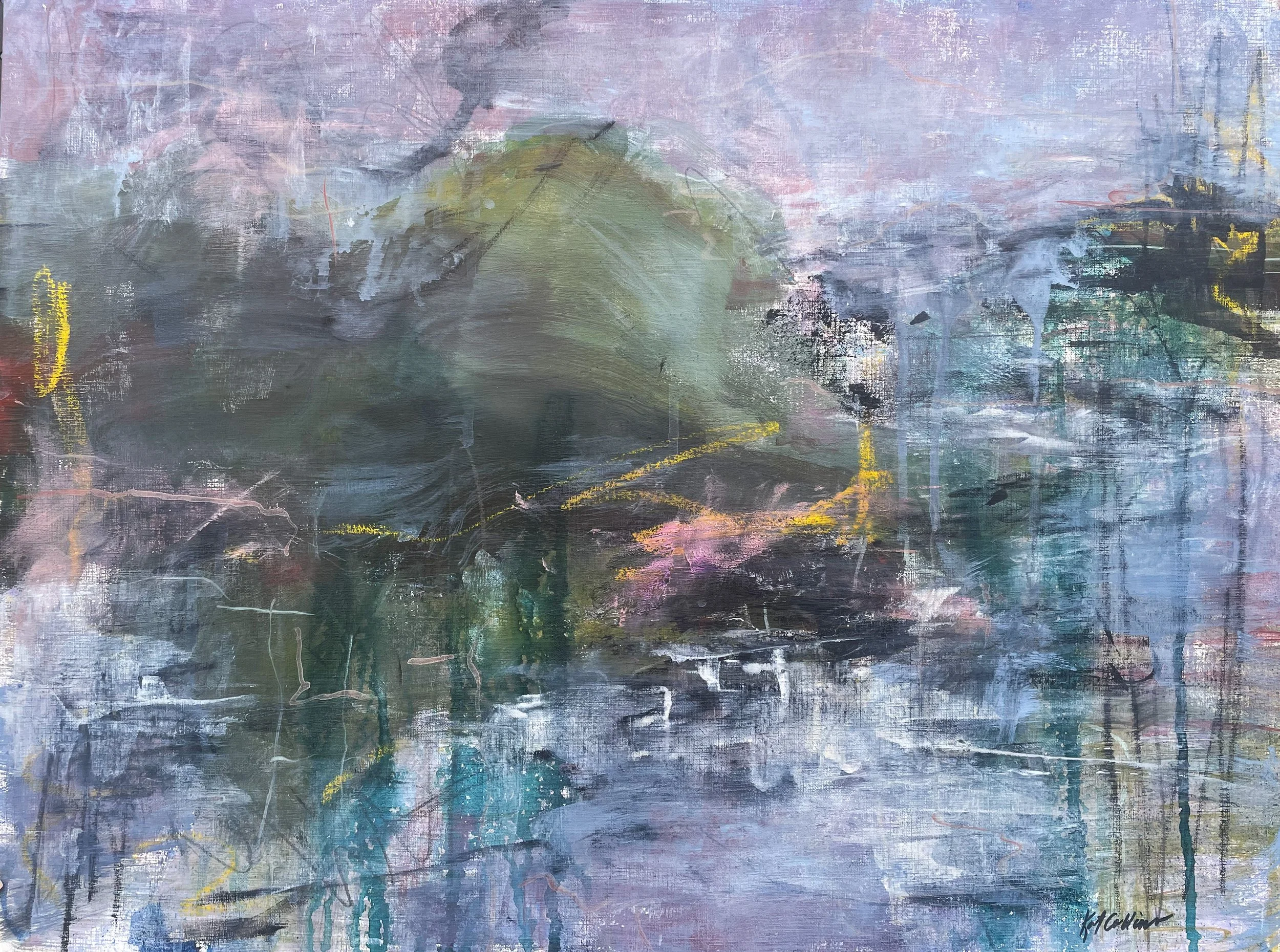
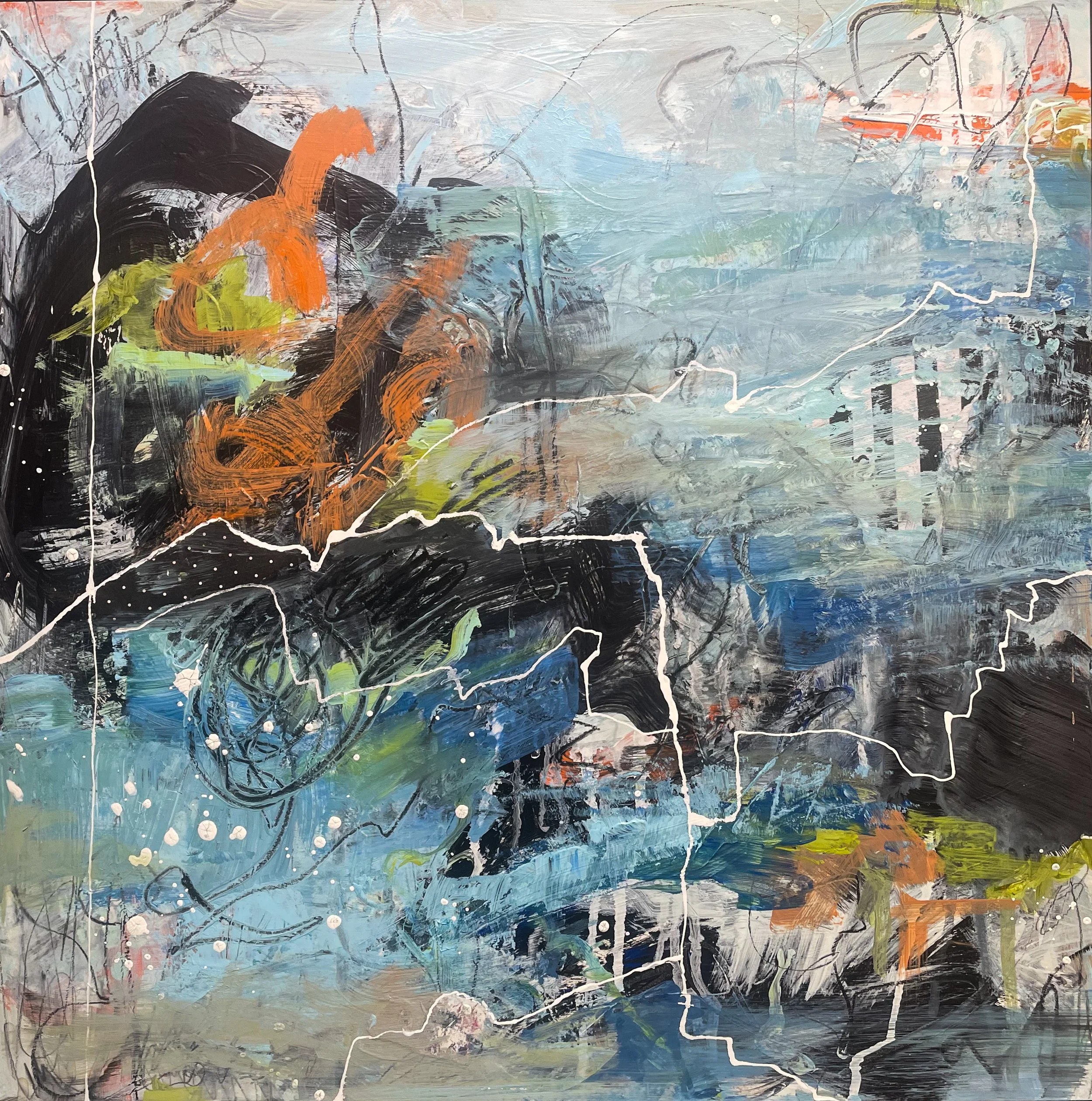
The paintings in the Whitman series try to hold that sense of interior climate—spaces where tension, softness, rupture, and quiet can all exist simultaneously.
Large fields of atmosphere. Marks that appear and disappear. Areas of density opening into air.
It’s less about describing a specific feeling and more about creating a space where viewers can encounter their own.
Years ago I wrote something in that same sketchbook entry that still feels true to me now:
“If we pause and truly are present, a gift is made known… an unspoken language that can only be felt.”
That’s what I hope a painting can do.
Not explain something.
Not illustrate an idea.
But create a moment where someone feels seen in a way that bypasses language entirely.
The Freedom of the Outside
Another part of that sketchbook entry surprised me when I read it again. I had written about feeling like an outsider—someone standing slightly apart from the room, observing rather than fully belonging.
“I’m an outsider, always looking in… I get the smiles and hellos and the nods. But never the inclusion.”
I still recognize that feeling sometimes.
But what I didn’t understand then is that being on the outside can also create a kind of freedom.
When you’re not trying to fit into a particular group or expectation, you begin to trust your own instincts more. You stop waiting for permission.
You make the work you need to make.
You take the time the work requires.
You follow the questions that keep returning.
And sometimes those questions stay with you for years.
Always Becoming
One line from that page keeps returning to me:
“We are always becoming.”
At the time, I wrote it as a personal reflection about life. But looking at it now, it also feels like a description of the creative process itself.
A painting is never really a fixed thing. It’s a moment in an ongoing conversation.
One work leads to the next. A question opens another question. Ideas that appear new often turn out to have been forming quietly for years.
What I’m realizing now is that my current work isn’t a departure from what came before.
It’s a continuation.
A deeper step into the same well.
And that’s both exciting and a little unnerving, because it means the path forward isn’t about reinventing everything.
It’s about going further.
Deeper.
Allowing the work to become what it wants to become.
Just as we are always becoming ourselves.