
Why Are People Afraid of Abstract Art?
When talking to a gallery owner about one of my abstract paintings recently, and who personally loves my abstract landscapes, he simply doesn’t sell much abstract art at his gallery. He says the town is a non-art-savvy demographic. He sells a lot of more traditional, representational work. When he displays one of my abstract landscape paintings or any abstract work, he often has to make a point to talk to the people viewing it to help them understand it. Even then, it can still scare people away from purchasing it.
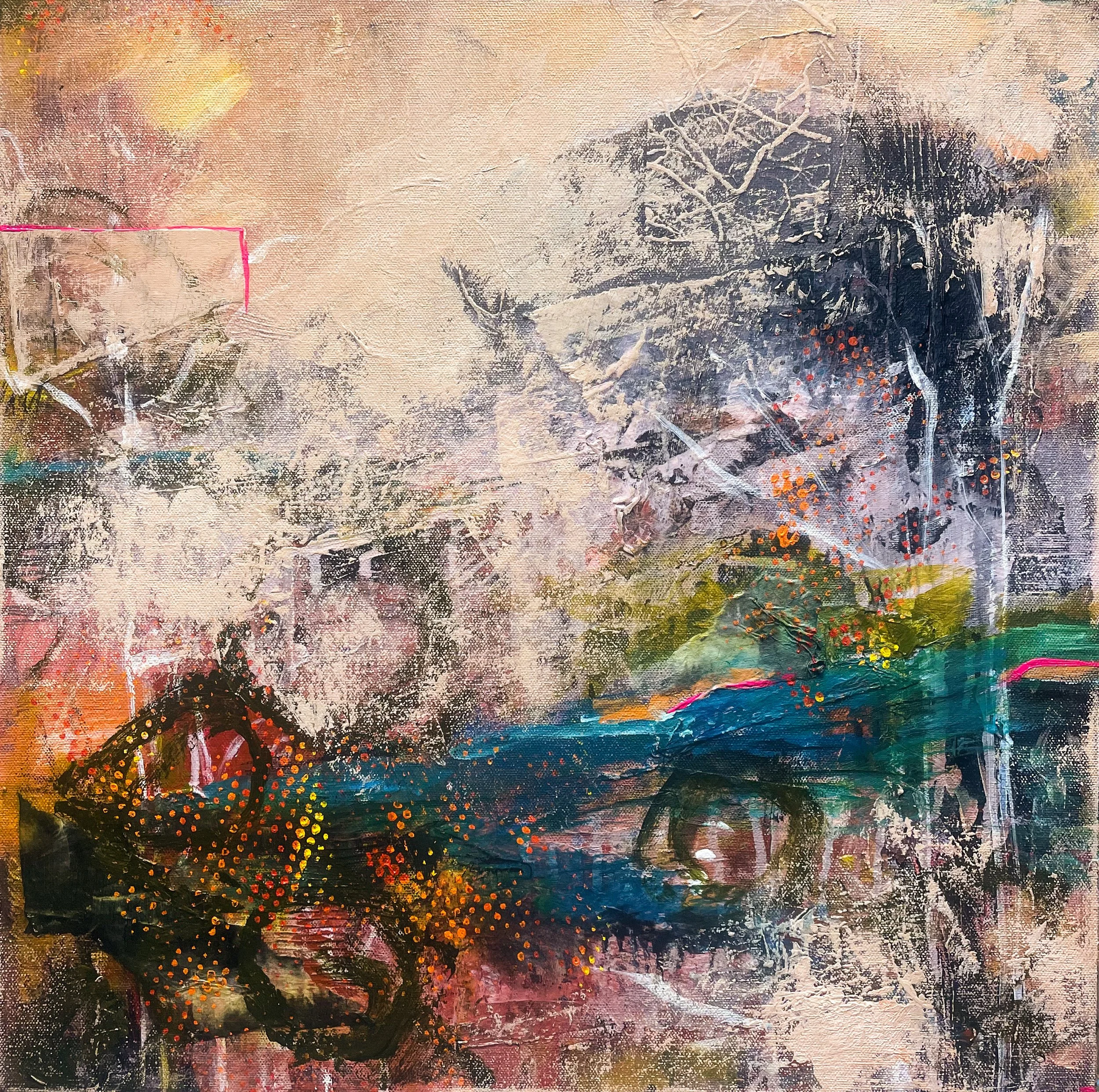
Rising Energies, 20x20, mixed media on canvas
Why are we so afraid of things we don’t understand or get right away? Is there something that stops us from looking deeper and asking questions? Why is that a hindrance?
Maybe some of it could be chalked up to today’s society and how focused we are on immediate gratification and immediate results. Everything happens NOW because of social media and the digital age. But I think it’s more than that.
This has always been a thing. When you look back at abstract artists in the past who started movements (Abstract Expressionism, Impressionism, Cubism, etc.), they faced similar problems where people didn’t understand what they were doing. They were criticized, ridiculed, and ousted from the traditional art world because what they were creating, believing, and exploring in their art wasn’t considered the standard at the time. Others felt threatened by something different.
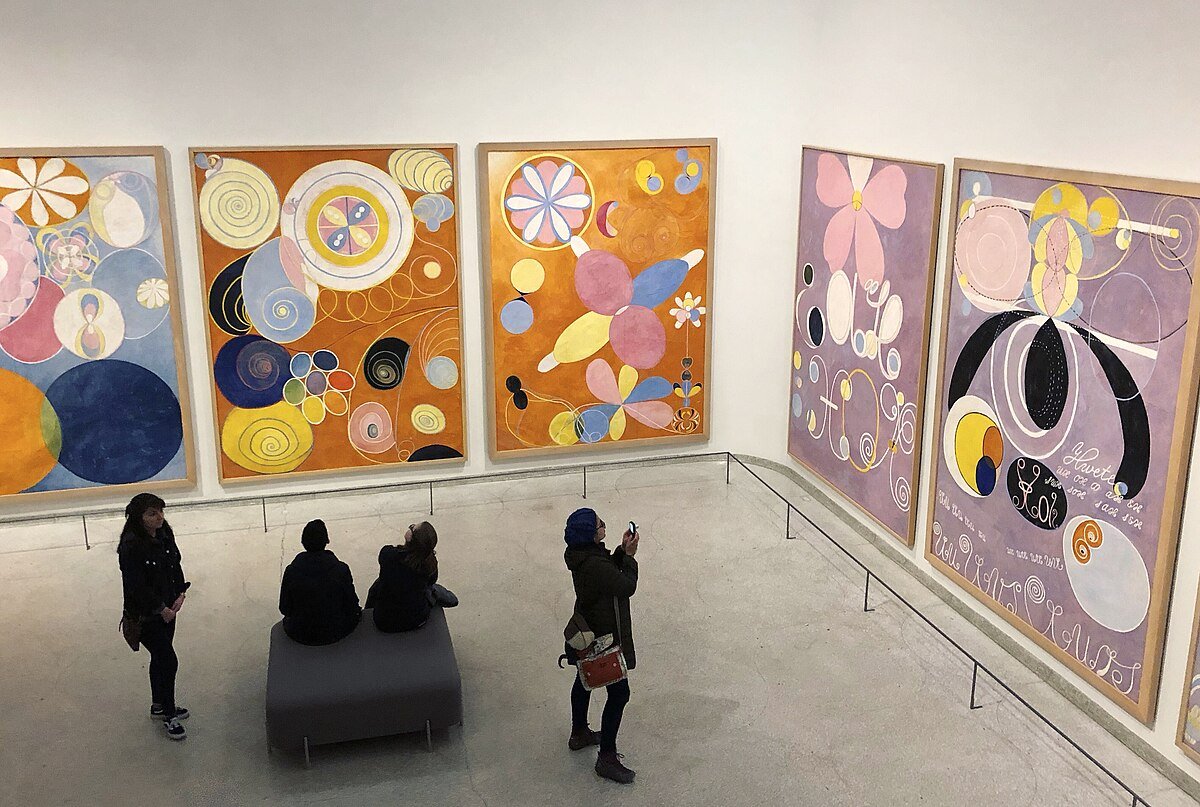
Exhibition view of Hilma af Klint's 'The Ten Largest' at the Solomon R. Guggenheim Museum in New York, 2018
Take Hilma af Klint, for example. Hilma af Klint was a Swedish artist whose paintings were considered among the first abstract works in Western art history. Her abstract paintings predate those of Wassily Kandinsky, Piet Mondrian, and Kazimir Malevich, who are often credited with founding abstract art.
“In a context where women artists were commonly thought to be capable only of copying, not innovating, she rarely presented her more radical, abstract art publicly and struggled to find an audience who appreciated it. Undeterred, she painstakingly edited, saved, and catalogued her work so it would be preserved for future audiences, and stipulated that it not be exhibited until two decades after her death, when she believed the world would finally be ready to understand what she had produced. Ultimately, it would take even longer. Although her art was finally shown in 1986, forty-two years after her death, it would take decades more before her extraordinary legacy finally earned the recognition it deserves.”
And she wasn’t the only abstract artist to experience this by any means. Many believe abstract art is hard to understand and interpret. Abstract art requires that you think and interpret things on your own in a freeing manner. It is truly what you make out of the piece.
The beauty of abstract art is that the painting starts in the mind of the artist and ends in yours. Human nature tends to want to put things in boxes and label them. It makes us feel uncomfortable and threatened to be unable to assign meaning to something we see right in front of us.
Abstract art often lacks recognizable imagery, forcing us to engage with our own interpretations and emotions, which could be uncomfortable and confusing. Jackson Pollack, an abstract expressionist artist, said, “Abstract painting is abstract. It confronts you.”
We are afraid when art is unfamiliar. We are afraid because we may know something new that could disrupt our comfort, something that may require us to change. We choose to be comfortable with what is already known and what fortifies us in our settled beliefs.
The artist is one who tells the truth about our lives, both the deepest self and the world in which we live, both past and present. Often, indirectly, with images and understatement, the truth is explored and offered, and we stand in a new light, in sometimes our most profound discomfort. Abstract art requires more effort to appreciate. You must use your imagination, feelings, emotions, and other senses to ask questions.
Abstract art is not about making something look real. It’s about exploring deeper ideas, emotions, and experiences. This exploration requires a deep understanding by the artist of artistic principles and a high level of creativity. Abstract artists push the boundaries of what art can be, creating new styles and expressing complex ideas. It encourages us to think differently about what art can be. Rather than representing the world as we see it, abstract art explores the unseen - the emotional, the spiritual, and the intellectual.
To understand abstract art, you need two things; an open mind and a wandering imagination. You need to be able to look beyond objects you already visually recognize. It is an intangible and emotional experience that engages you to become part of the artist’s story. The experience is often completely different for every individual, depending on their personality and state of mind. The biggest keys are to let go of your preconceptions and be curious. You may never like abstract art, but that’s perfectly okay. Everyone has their preferences. But you don’t have to like something to appreciate what it offers.
“Abstraction allows man to see with his mind what he cannot see physically with his eyes… Abstract art enables the artist to perceive beyond the tangible, to extract the infinite out of the finite. It is the emancipation of the mind. It is an exploration into unknown areas.”
– Arshile Gorky
