Layer by Layer: The Materials That Speak
(Part 3 of the "Grit & Beauty: Notes from the Studio" series)
Every mark tells a story.
Every layer holds a memory, a decision, a shift in emotion. When I’m in the studio, the materials I choose aren’t just tools—they’re extensions of how I feel. They help me speak in texture, rhythm, tension, and release.
My process is deeply intuitive. I rarely plan ahead. Instead, I follow the energy. I might start with soft pencil lines or a big splash of ink, then build on that moment by moment. Sometimes I paint over everything and start again. Sometimes one bold mark is all it takes to shift the entire direction of a piece. It’s not linear—it’s emotional. Messy. Real.
What I Work With
Acrylic paint gives me the flexibility to work fast and layer deeply. It dries quickly, which allows me to react to each moment as it happens. I can push it around, sand it back, pour it, or scumble it into the surface.
Oil pastel and charcoal bring grit—literally and emotionally. They’re raw and expressive, allowing me to scratch, drag, and make lines that feel like they came straight from the body.
Graphite and pencil are where I start most often. Gentle lines. Ghost marks. I love how they peek through later layers like a voice you can still hear whispering underneath the noise.
Collage and found papers carry texture and history. I often use torn bits of old writing, patterns, music sheets, or previous paintings—like layering memory right into the piece.
Ink is my wild card. It bleeds, blooms, spreads unexpectedly. It teaches me to let go of control, which is both terrifying and freeing.
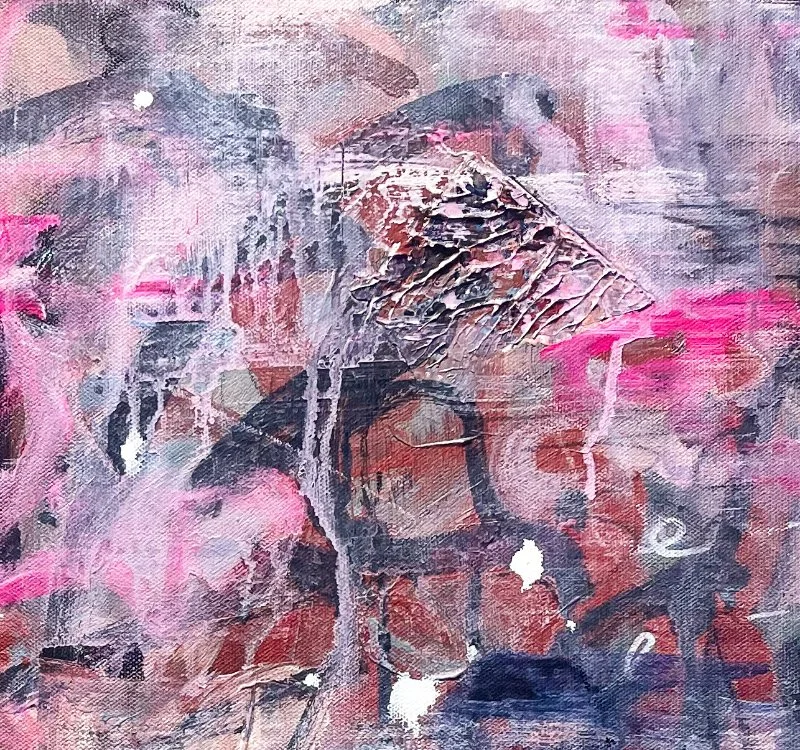
Detail from “Manifesting Magic” — layers of oil pastel, charcoal, and scraped acrylic building up a complex emotional surface.
There’s something sacred in this layering process. It mimics the way we live—building, covering, revealing. Every painting becomes a palimpsest of emotion, movement, and memory. You can feel when a surface has been through something. And I love that.
A Conversation Between Intuition and Surface
People often ask when I know a painting is done. And the honest answer is: I don’t, until it tells me. There’s a feeling I get in my chest—like a breath landing. It’s not about perfection. It’s about truth. Sometimes it’s raw. Sometimes it’s tender. But it always feels like something has been released.
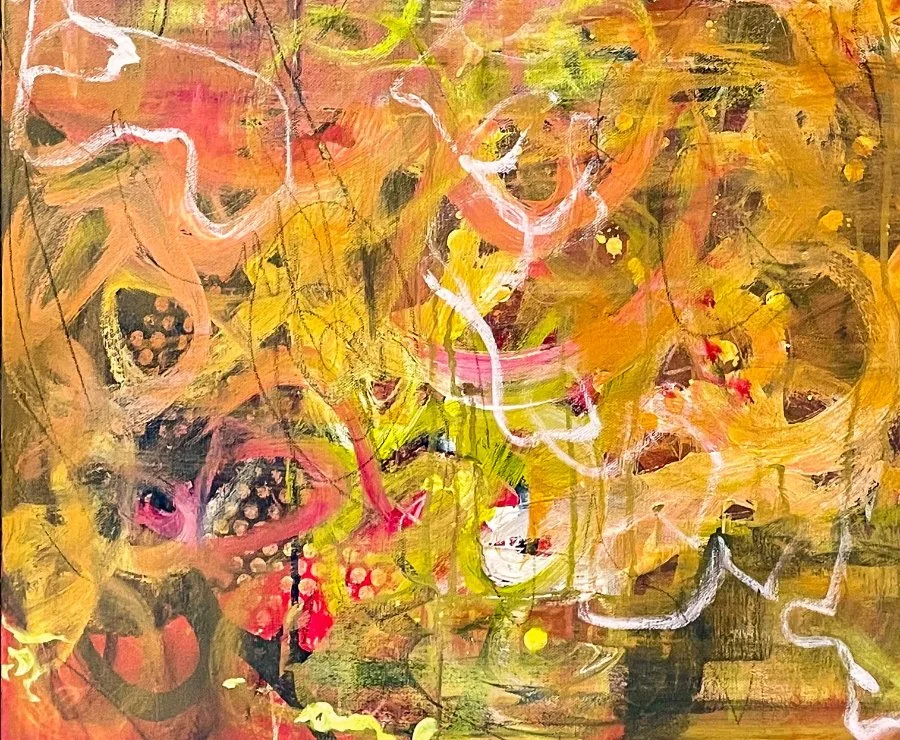
Detail from “There Is Something Between Us” — a moment where graphite lines and luminous washes hold unresolved emotion.
And just as often, I stop before I feel ready. Because part of my practice is learning to let things be unresolved. That’s part of the emotional weather too—the uncertainty, the quiet, the space between.
Why Materials Matter Emotionally
Each material carries its own emotional tone. Smooth pencil feels quiet. Heavy charcoal feels urgent. Translucent layers feel like memory. Every choice adds to the story, even when I don’t consciously realize it in the moment. That’s what I love most—when a painting starts saying something I didn’t even know I needed to hear.

Detail from “This Too Shall Last” — a scratched, worn surface where the history of layers tells its own story.
These surfaces aren’t just pretty textures. They’re records. And when people stand in front of my work, I hope they feel that history. That weight. That openness. I hope they feel seen in the mess and the movement.
Inside the Process: Living Your Daydreams
Here’s a glimpse at two earlier stages of “Living Your Daydreams.” What began with loose writing, found papers, and bold underpainting eventually gave way to a more intuitive, dreamlike palette—swirls of pink, movement, and black ink that grounds it all.
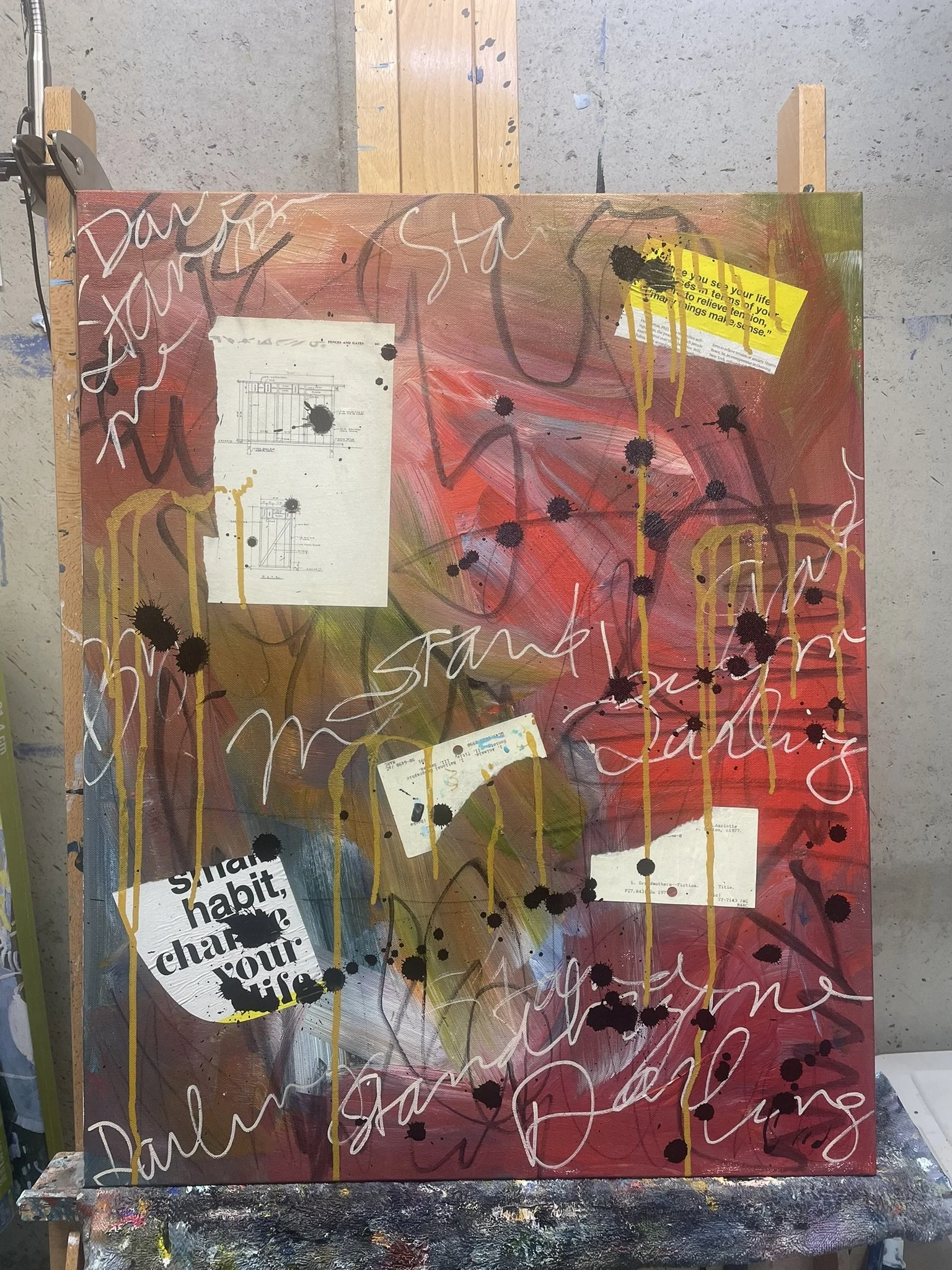
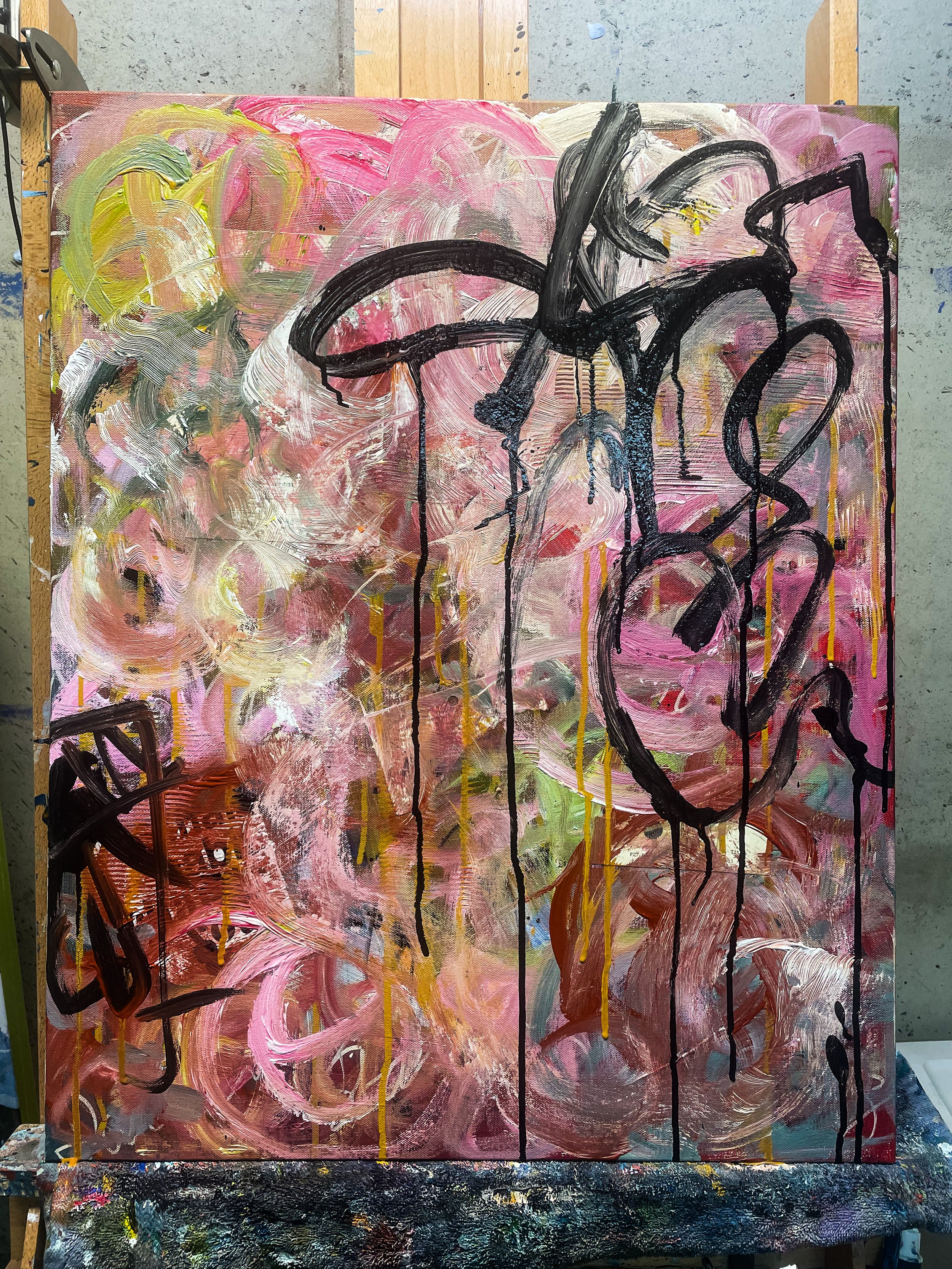
This transformation is what I live for. Watching a piece evolve into something I never could’ve planned—but feels completely true. That’s when I know it’s working.
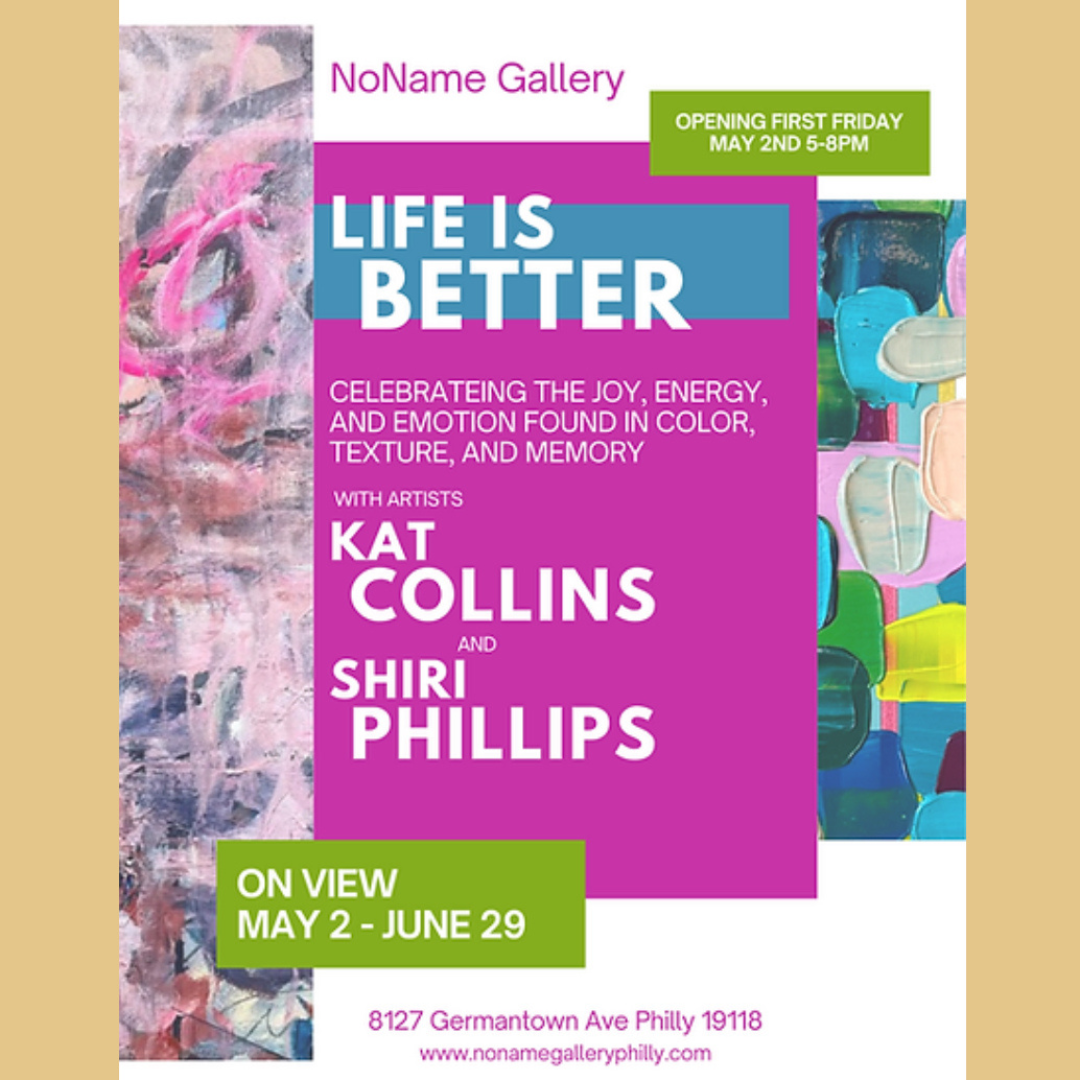
In the next post, I’ll reflect on the Life Is Better exhibit at NoName Gallery and how my work fits within the show’s larger themes of joy, memory, and emotional connection.
Thank you for stepping into the studio with me.