How I Create Abstract Landscapes
My abstract paintings often have a landscape vibe, even when I’m not specifically creating a landscape. But what does that even mean? Why not paint an actual landscape the way it looks?
Of course, it would seem easier to do that, especially since many people understand a realistic landscape. Not quite so when it’s an abstract landscape!
“I don’t get it. It’s just scribbles,” one woman said.
That’s a common perception, and it’s tied into the idea that non-representational painting is easy. I mean, how hard can it be to paint lines, colors, and shapes without having to “get it right?”
But many artists quickly discover that this isn’t the case and learn that there is so much more to it than they imagined. First, creating a successful abstract painting requires an understanding of composition, color theory, and values/contrast. They have to know how to create harmony along with interest. The biggest thing, though, is you have to have a reason behind painting this way, an intention, something you want to express, something that can’t be expressed any other way.
Here’s the thing: I could paint a realistic landscape. I would have something to refer to and copy! I simply need to learn the techniques to recreate what I see. Keep in mind, though, that’s NOT as easy as it sounds, either. It takes great skill and a lot of practice. I have a huge respect for representational artists and own some of their work!
When I paint abstractly, at least the way I do it, I have no starting point. I don’t have anything to copy and don’t have a plan or expected end result in mind. I have no idea what I’m about to create! The painting must emerge from nothing. This can feel quite overwhelming!
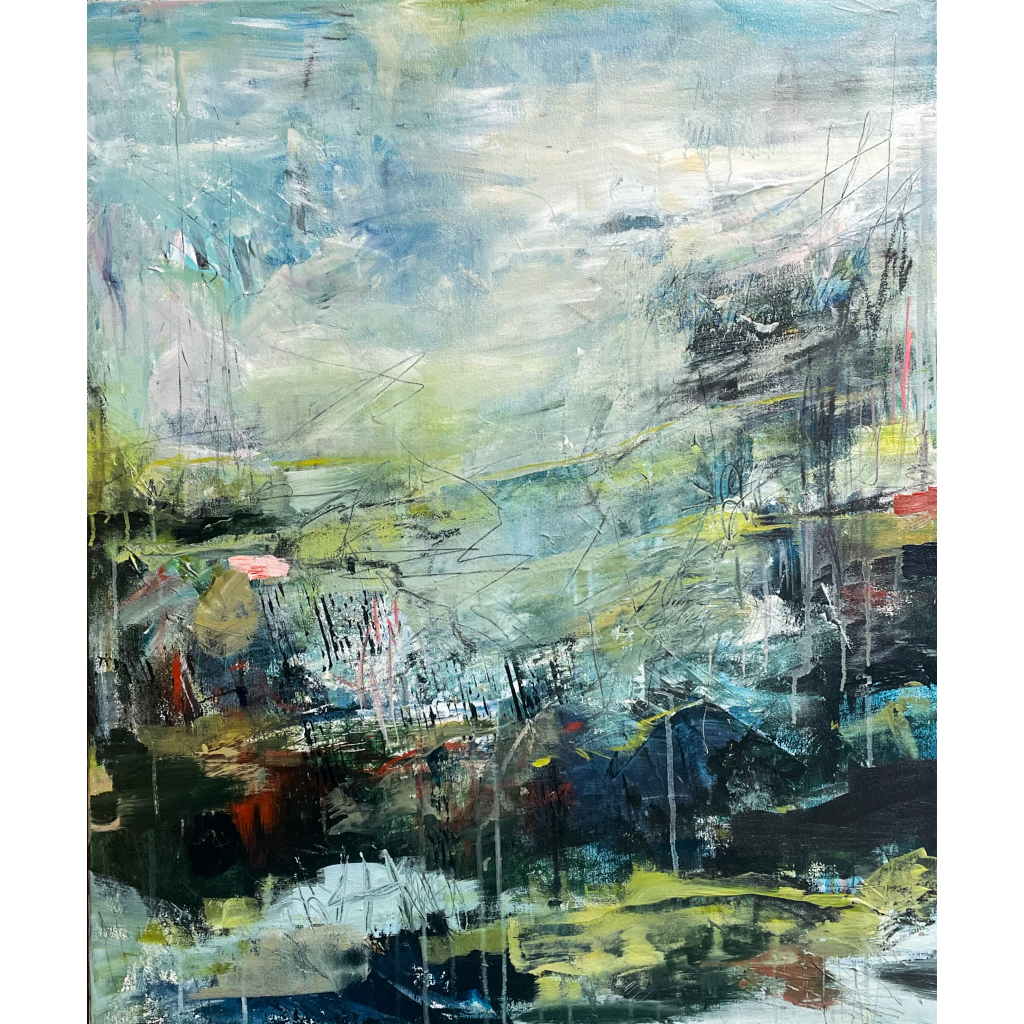
Being Within The Electrum, 30×36, mixed media on canvas - available at Wayne Art Center
MY ABSTRACT PAINTINGS
If it’s so daunting, why do I do it?
Have you ever been in a landscape—a forest, by the sea, on a mountain, in the desert, next to a glacier—and experienced the smell, taste, and texture—a full emotional moment? We don’t just experience the world with our eyes. We experience it with all of our senses, and layered on top of that, we bring our past experiences and our expectations of the future into it. We also experience it through our current mood.
My paintings are not exact copies of nature or life but rather an experience of light, space, terrain, and atmospheres that evoke the emotional weather of being present at that moment in time.
When I paint realistically, I find it doesn’t say what I want it to say. It doesn’t capture the experience that I want others to feel. I want you to experience your own story within the painting, using what I’ve created as a guide leading you along the path of discovery.
Once I have a general idea of what feeling/emotion I want to capture, I choose the color palette, which often revolves around three or four staple colors (but can change regularly). I then very loosely sketch an idea for a composition directly on the canvas with either charcoal or India ink. Although this can and does change as I go, it gives me a starting point. This is all done intuitively to start with, following what the painting tells me it wants and needs.

How a painting often starts - washes of color, bold black lines, and the beginnings of patterns and collage
MY PAINTINGS EVOLVE NATURALLY
As I’ve mentioned, I don’t come up with an idea for an abstract painting and then execute it. I’ve never painted that way. And when I’ve tried, they’ve felt constricted, tired, and boring.
I find when I think too much the painting dies. Instead, I must allow my intuition to guide me as I build up the layers of paint. And I have to be comfortable with the ugly stages, when the painting has no idea what it wants to be (and I don’t either). Often, this is when people give up on a painting, thinking it’s a failure. But I’ve learned that pushing through this stage always leads to something more interesting and engaging.
I often scrape back into layers and paint in thin washes of color at times to reveal what lies beneath. I love the effect this creates. It conveys a feeling of history and depth. But I also have to be willing to paint over those gorgeous effects if they don’t serve the painting as a whole.
For example, the painting on the left below was full of whites, grays, purples, and reds. It felt sad, like the energy had faded. It was a good painting despite the murkier feelings. I could’ve left it alone. But I knew it needed to be pushed further (and I didn’t want sadness!). When that happens, I do something drastic - bigger brushes, different colors, unusual line or texture, etc. I release the brush to do whatever it needs to do. I’m pulling out from within knowledge that has been waiting for this moment. No “don’t do this, do that.” No boundaries. No slow strokes. It puts me in another zone to see where it leads me.
In this case, I quickly painted a swash of deep cobalt turquoise across the painting. It was drastic and a bit emotional! But it felt right. It revived the energy and pushed the painting into a more vibrant direction. You can still see the echoes of the underpainting with the white and black marks and peeks of red.

Before I made the big turquoise swath of color and the subsequent changes.

Rising Energies, 20×20, mixed media on canvas
INTUITION & INTELLECT
Intuitive painting is about the process of allowing each layer of paint to inform what comes next. It’s about letting go of your fear of expectations to allow your painting to evolve based on your heart, vision, and play. However, an emphasis on intuition alone doesn’t create great work, and neither does focusing on just intellect or technique. Making the art of your life takes intuition AND intellect.
Intellect, in the context of art, refers to using reasoning, logic, and critical thinking to analyze and refine composition, color theory, and technique. It is what I have learned over time and through my experiences. Intellect is how we integrate new skills, knowledge, and information into our deepest selves. It is necessary in the process of Mastery. It is the bridge between intuition and instinct. It is repetitious lessons about technique that eventually become second nature, like muscle memory, that I can tap into as I work.
Intuition guides the process, and intellect shapes and refines the creation. You can’t think both at the same time. What you do is practice technique until it becomes a part of your reflexes - at this point, thinking is no longer necessary. Intellect catches up to intuition, and in those moments, I feel a sense of flow, ease, and certainty. I know what to do, and I just do it.
SAVE THE DATE!
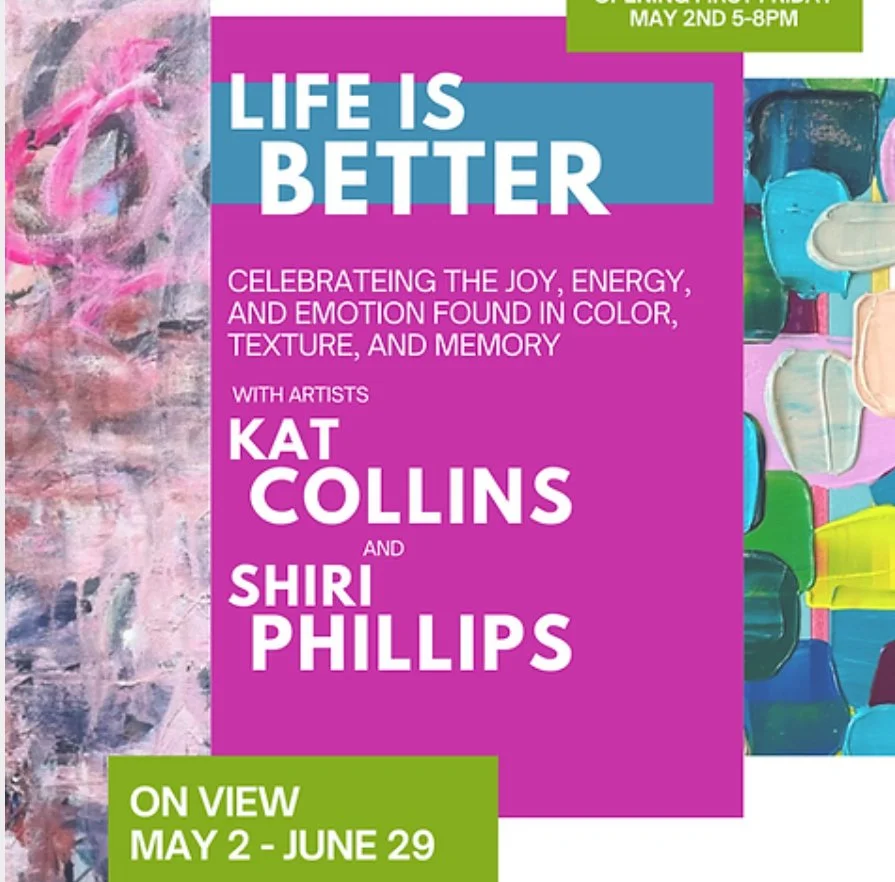
I have an art show with another fabulous artist coming up in May 2025! This show will feature my Grit & Beauty series. Opening reception is May 2, 5 - 8 pm. I’d love to see you there!